
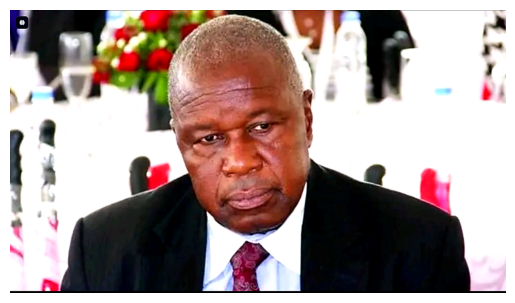
Zimbabwe’s ruling party, ZANU-PF, is once again in the throes of internal tension. At the centre of this quiet storm is Chris Mutsvangwa — war veteran, seasoned politician, and current party spokesperson. His silence on Constitutional Amendment Bill No. 3 and recent public remarks advising President Emmerson Mnangagwa to reconsider the 2030 vision have raised eyebrows, suggesting that Mutsvangwa may be quietly positioning himself for the country’s top job.
From Coup to Cabinet
In the aftermath of the November 2017 coup that ousted Robert Mugabe, Mutsvangwa was appointed Minister of Information, Publicity and Broadcasting Services in Mnangagwa’s first Cabinet. He later served as Mnangagwa’s special adviser, before being moved out of Cabinet and eventually settling into his current role as ZANU-PF Secretary for Information (party spokesperson).
This trajectory reflects both his proximity to power and his recurring clashes with authority — a pattern that has defined his political career.
Silence on Amendment Bill No. 3
The proposed Constitutional Amendment Bill No. 3, gazetted in February 2026, seeks to alter key provisions on presidential tenure, succession, and governance structures. While most of the ruling party has rallied behind it, Mutsvangwa has conspicuously withheld support. In Zimbabwe’s polarized climate, where neutrality is often seen as betrayal, his silence speaks volumes.
By not endorsing the party resolution, Mutsvangwa signals dissent — a dangerous stance in a system that demands loyalty.
A Subtle “No” to 2030
Recently, Mutsvangwa appeared in the press advising Mnangagwa not to pursue the 2030 vision, a cornerstone of the President’s long-term agenda. This advice, framed as caution, is widely interpreted as a rejection of Mnangagwa’s roadmap and, by extension, a challenge to his authority. In a party where alignment is survival, Mutsvangwa’s quiet diplomacy is loud enough to be heard.
Undermining the Principal
By refusing to back Amendment Bill No. 3 and questioning the 2030 vision, Mutsvangwa risks undermining the office of his principal. His actions suggest a calculated strategy: to distance himself from Mnangagwa’s legacy while positioning as a credible alternative. In doing so, he implicitly dismisses Vice President Constantino Chiwenga as a stumbling block, signaling that the succession battle is already underway.
Building Alliances: Tungwarara vs. Tagwirei
Mutsvangwa’s quiet manoeuvres also extend to alliances. He is reportedly aligning with Paul Tungwarara, recently co-opted into ZANU-PF’s Central Committee. Tungwarara himself has been in a tug of war with businessman Kuda Tagwirei, another figure seen as eyeing the presidency post-2030. These alignments suggest that Mutsvangwa is not just resisting Mnangagwa’s vision — he is preparing for a succession contest where allies will be crucial.
The Danger of Sitting on the Fence
In Zimbabwe’s polarized political climate, sitting on the fence is more dangerous than choosing a side. Mutsvangwa’s silence on Amendment Bill No. 3 and his subtle rejection of 2030 place him in a precarious position: too loud to be ignored, yet too quiet to be openly challenged. His quiet diplomacy may be strategic, but it is also risky — in a party where loyalty is currency, ambiguity can be fatal.


 Zimbabwe Rising
Leave a comment