
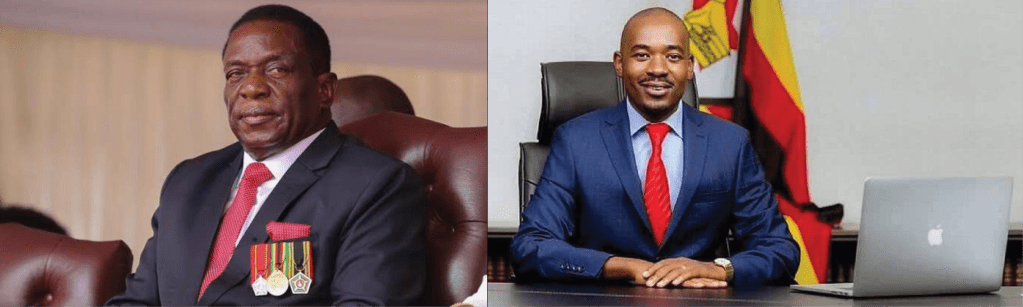
Former opposition leader Nelson Chamisa officially re-entered Zimbabwean politics on January 23, 2026, but his return has been met with significant backlash from former supporters who accuse him of inconsistency and betrayal. Chamisa asserts that he has developed a bold new strategy focused on creating a broad-based citizens’ movement, mobilizing communities for peaceful engagement, and presenting himself as the leader of a “fresh start” for Zimbabwe. However, many Zimbabweans express doubts about his political acumen’s adequacy to confront the formidable ZANU-PF party.
Chamisa intends to seek election not through traditional party structures but via a citizen-driven movement. Nevertheless, critics, particularly from his former base, label this approach as weak and lacking structure, arguing that it contributed to the decline of his previous party and signifies serious internal challenges that undermine his aspirations. Issues like factionalism within his movement, limited organizational capacity, and an absence of a coherent strategy beyond charismatic rallies render him vulnerable.
Nelson Chamisa’s ambition for power is evident, yet his track record as a politician reveals a troubling weakness. He has lost party leadership twice in just six years, a clear indication of his struggle to maintain authority. Since Morgan Tsvangirai’s death in 2018, Chamisa has been engulfed in internal conflicts that led to the fracturing of the MDC-T and his eventual loss of the party to Douglas Mwonzora. Recently, he abandoned his recent endeavour, the Citizens Coalition for Change (CCC), established on January 22, 2022, after losing control to Sengezo Tshabangu, whom he accused of being a ZANU-PF proxy.
Once a favoured leader among urban youth, Chamisa now faces significant and systemic challenges that have continually thwarted opposition movements. His leadership style has attracted criticism for authoritarian tendencies, as he has elbowed out other senior party members through a deeply flawed electoral process. The infamous open voting system (Bereka Mwana), where voters queue behind their chosen candidates, has come under fire for its perceived intent to expose dissenters to undue scrutiny. Additionally, Chamisa stands accused of corruption, with claims that he has misappropriated donations intended for party development. Despite a citizen-led fundraising campaign that raised over US$120,000 for a bulletproof car in December 2021, party members assert that he has failed to account for it.
In stark contrast, President Emmerson Mnangagwa is rapidly gaining traction in urban centres, as the political landscape in Zimbabwe increasingly favours ZANU-PF. This development makes Chamisa’s chances of dislodging the ruling party ever more remote. Furthermore, ZANU-PF maintains a robust stronghold in rural areas, where the majority of Zimbabweans reside. Their established patronage networks and formidable party finances ensure unwavering loyalty that opposition campaigns find exceedingly difficult to penetrate.
President Mnangagwa’s government has successfully cultivated popularity through decisive economic reforms, significant infrastructure initiatives, and a well-defined vision for national progress encapsulated in Vision 2030. The administration’s commitment to modernization and stability resonates with citizens who are experiencing tangible improvements in their lives. The clear goal of transforming Zimbabwe into an upper-middle-income country by 2030 has instilled a sense of optimism. Central to this long-term vision are substantial investments in industry, mining, agriculture, and social services, ensuring a solid foundation for future growth.
Given these realities, the “ED2030” narrative is gaining traction. Unless seismic shifts occur, Mnangagwa’s rule until 2030 appears highly probable, sidelining Chamisa and cementing ZANU PF’s dominance in Zimbabwean politics.


 Zimbabwe Rising
Leave a comment