
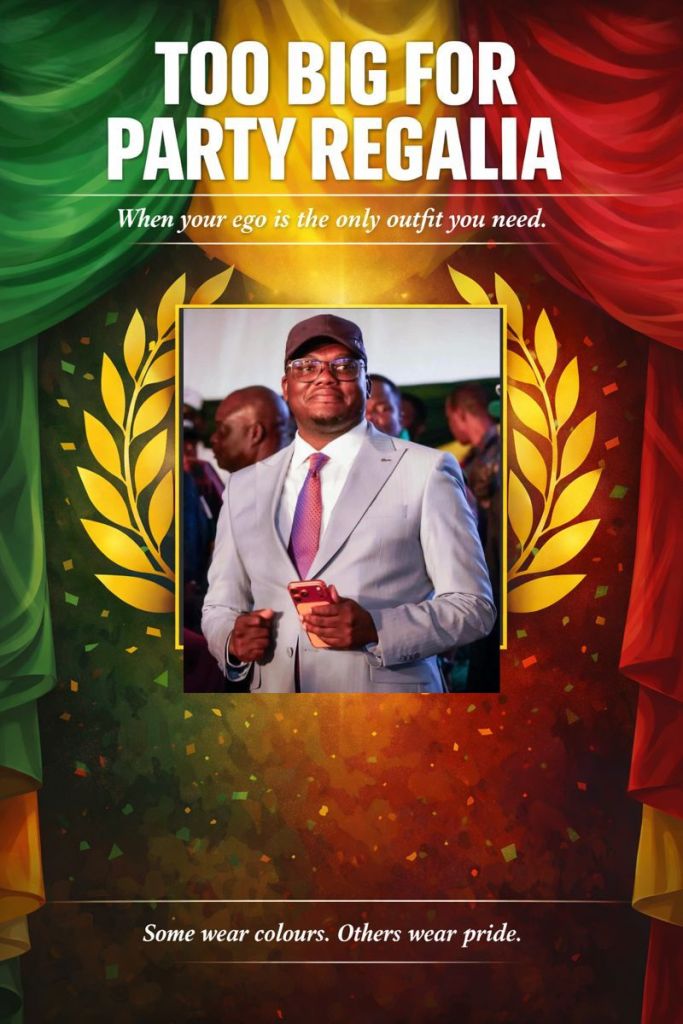
Paul “Tempter” Tungwarara was brought into President Emmerson Mnangagwa’s inner circle to support Vision 2030, mobilise resources, and help deliver empowerment programmes linked to the Office of the President. The intention was clear: visible projects, grassroots support, and political stability for the Second Republic.
What has unfolded instead is a problem that is now too big to ignore.
Rather than strengthening the President and ZANU-PF, Tungwarara’s conduct is increasingly weakening party discipline, fuelling factional fights, and damaging the President’s credibility. This is no longer about rumours or opposition propaganda. The damage is coming from inside.
From Presidential Advisor to Factional Trigger
Tungwarara’s rise has been fast and highly politicised. Through so-called “Presidential Empowerment” initiatives, he distributed money, bicycles, vehicles, agricultural inputs, and cash to party structures. While framed as empowerment, these actions created a dangerous perception of vote-buying and personalised patronage tied to one individual, not the party or the State.
The situation reached a breaking point in December 2025 when the Manicaland Provincial Coordinating Committee irregularly co-opted Tungwarara into the ZANU-PF Central Committee, despite him not coming from the required district of Chipinge. The process was widely viewed as compromised. Reports of cash handouts, vehicles, and inducements circulated openly.
National leadership moved in quickly. Political Commissar Munyaradzi Machacha and Treasurer-General Patrick Chinamasa nullified the co-option, citing inducements and violations of party rules. That public reversal embarrassed the province, the party, and most importantly, the President whose advisor was at the centre of the scandal.
This incident exposed something more serious: open defiance of party procedures and national authority. When a province openly challenges directives from headquarters, it signals loss of control.
Fuel for Factional Wars
Tungwarara has also become a convenient tool in ZANU-PF’s internal factional battles. His name has repeatedly surfaced in fights linked to succession politics and economic power struggles.
There are growing indications that his camp has been used to attack other business figures aligned to the President, particularly Kudakwashe Tagwirei, through rallies and coded political messaging. Former Norton MP Temba Mliswa publicly warned that Tungwarara is being manipulated by elements linked to Vice President Constantino Chiwenga’s faction, including senior party figures.
Mliswa described Tungwarara as “excitable” and “being used”, warning that he is collateral damage in a bigger power struggle meant to weaken the President’s balancing strategy within the party.
Whether Tungwarara understands this or not is irrelevant. The result is the same: confusion, division, and loss of discipline. This kind of instability reflects badly on the President’s authority and leadership.
Scandals That Land at the President’s Door
Tungwarara’s business dealings are inseparable from his political role. Through Prevail Group, he has secured multiple no-tender contracts linked directly to the Office of the President. These include borehole drilling, hospital refurbishment, mining activities, and infrastructure projects.
The problems are well documented:
- Borehole Programme: Parliament raised concerns about inflated costs, poor delivery, and funds paid without results.
- Mining Monopoly: Cabinet decisions gave Prevail extensive control over alluvial gold and river rehabilitation, creating a perception of State capture.
- Fraud Allegations: Cases involving unpaid loans, a US$2.3 million dispute with an Indian investor, and missing funds continue to circulate, with police denials only increasing public suspicion.
Every one of these scandals carries the “Presidential” label. That means the President takes the political hit, not Tungwarara alone. Critics do not separate the advisor from the office that empowered him.
The Cost to the Second Republic
At a time when Zimbabweans are facing high prices, power cuts, job losses, and food insecurity, the image of a politically connected elite living large is deeply damaging. Lavish lifestyles, foreign trips, helicopters, and luxury vehicles linked to empowerment funds destroy the moral case of the Second Republic.
What was meant to build loyalty is now creating resentment. Genuine party cadres feel sidelined. Provinces feel manipulated. The public sees hypocrisy.
For President Mnangagwa, Tungwarara was meant to be an asset — a mobiliser, a financier, a delivery man. He has become a political poison pill.
Silence or continued protection only deepens the problem. It sends a message that rules do not apply to those close to power. That message weakens the party, emboldens factions, and erodes the President’s grip.
A Test of Leadership
This is no longer about one advisor. It is about whether the President is willing to protect the integrity of his office, enforce discipline, and put the party above individuals.
Zimbabweans are watching. ZANU-PF members are watching. History is watching.
Loyalty to the President cannot mean defending excess, indiscipline, and greed. Sometimes loyalty means removing the problem before it consumes everything around it.
If the Second Republic is to survive with credibility, figures who weaken it from within must be confronted — no matter how close they sit to power.


 Zimbabwe Rising
Leave a comment