

In a nation where millions struggle with poverty, hyperinflation, and crumbling public services, the rise of Wicknell Chivayo stands as a stark symbol of unchecked elite enrichment. The controversial businessman, often dubbed “Sir Wicknell” for his flamboyant self-styling, has been linked to a series of multimillion-dollar government contracts marred by allegations of inflation, non-delivery, and procedural irregularities. While Chivayo has denied wrongdoing and was recently cleared by Zimbabwe’s Anti-Corruption Commission (ZACC) in one high-profile case, the pattern of scandals raises profound questions about accountability, political patronage, and the erosion of public trust in Zimbabwe.
Chivayo’s controversies span years. His company, Intratrek Zimbabwe, secured a US$173 million tender in 2015 for a 100MW solar plant in Gwanda. Despite advance payments estimated between US$5 million and higher figures for feasibility studies, the project remains largely abandoned a decade later—an overgrown site with minimal development. Critics, including parliamentary committees, have decried it as a textbook example of wasted public funds. Though legal disputes dragged on, courts eventually acquitted Chivayo of related fraud charges, and recent reports suggest efforts to revive
More explosive were allegations surrounding the 2023 elections. Zimbabwe’s Treasury paid over R1.1 billion (about US$58 million) to South African firm Ren-Form CC for electoral materials. Investigations by South Africa’s Financial Intelligence Centre flagged suspicious flows, with over R800 million (US$42 million) allegedly diverted to Chivayo-linked entities. Examples of gross inflation—a server billed at R23 million against a market value of R90,000—fueled claims of kickbacks and money laundering. South African authorities probed the matter, but in December 2025, ZACC closed its investigation, citing no direct contractual link between Chivayo and the Zimbabwe Electoral Commission (ZEC). Chivayo hailed this as vindication, blaming “fabricated lies” from political opponents. Sceptics, however, point to the narrow focus on contracts while ignoring financial trails.
A similar cloud hangs over a US$437 million contract for cancer treatment equipment, awarded in 2025 to TTM Global Medical Exports—a South African company registered months earlier and linked to Chivayo. Critics slammed the deal for bypassing tenders, with annual payments of over US$109 million and a US$52.5 million advance. Outrage intensified amid Zimbabwe’s strained healthcare system, where patients often lack basic treatment.
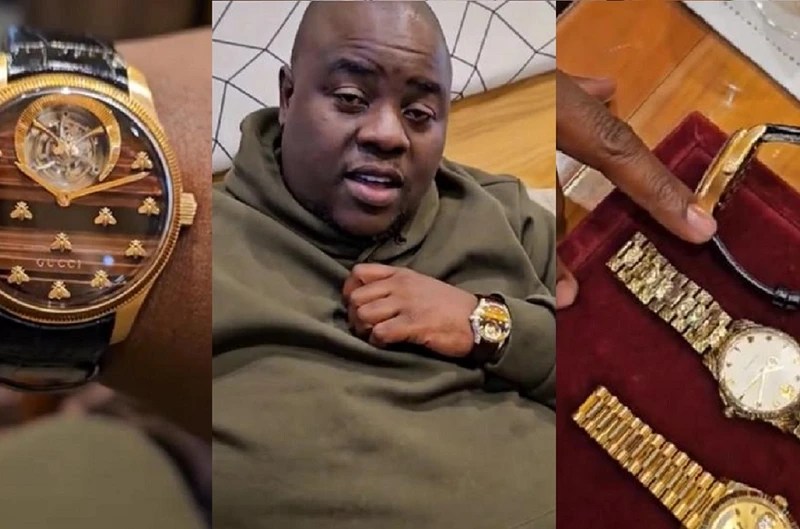
Image Source: Instagram @sirwicknell
Chivayo’s past adds to the scrutiny: an early conviction for money laundering related to a Zimbabwe Power Company deal, though later cases collapsed or were acquitted. His lavish lifestyle—spending US$9.3 million on luxury cars and gifts in one year—has drawn accusations of influence-peddling, including alleged vote-buying in sports elections and gifting vehicles to musicians, journalists, and ZANU-PF loyalists.
These episodes implicate hundreds of millions in public funds, yet outcomes often favour the connected. ZACC’s clearance in the ZEC case, amid perceptions of political interference, exemplifies impunity. But in a country ranked poorly on global corruption indices, such defences ring hollow.
Zimbabwe deserves better. True progress requires independent probes, transparent tenders, and consequences regardless of proximity to power. Until then, figures like Chivayo will continue to embody a system where public wealth enriches the few, while the many bear the cost. The time for genuine reform is overdue.


 Zimbabwe Rising
Leave a comment