
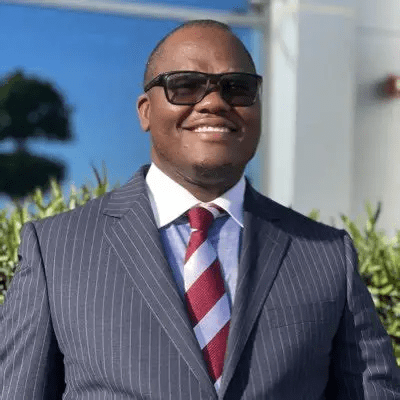
In the volatile ecosystem of ZANU-PF politics, where loyalty, liberation credentials, and a strict hierarchy are paramount, Paul “Tempter” Tungwarara has burst onto the scene, disregarding protocols and provoking the party’s entrenched power players. His recent push for co-option into the Central Committee reveals a stark lack of political acumen. If he continues to challenge senior figures like Patrick Chinamasa, Munyaradzi Machacha, Christopher Mutsvangwa, Oppah Muchinguri-Kashiri, and Buhera West MP Tafadzwa Mugwadi, his meteoric rise might be met with a rapid downfall.
Tungwarara, a businessman and Special Advisor to President Emmerson Mnangagwa on investments, wields significant wealth and influence. Tasked with attracting foreign capital—especially from the UAE—he seeks to position himself as a contemporary dealmaker in a party deeply rooted in the narrative of liberation struggle. However, his entry into formal party structures exposes him as a newcomer who confusingly equates financial power with political prowess.
In early December 2025, a controversy ignited when the Chipinge District and later Manicaland Province made a bold move to co-opt Tungwarara into the Central Committee, filling the vacancy left by Dorothy Mabika. The provincial coordinating committee rallied behind him with unanimous support, highlighting his deep roots in Chipinge and his noteworthy contributions to the party. However, this local enthusiasm quickly clashed with the rigid structures of the national party. The ZANU-PF heavyweights, led by prominent figures including Secretary for Legal Affairs Patrick Chinamasa, swiftly nullified the co-option, citing procedural irregularities and serious allegations of vote-buying. Reports surfaced detailing how Tungwarara’s supporters allegedly distributed cash and food to sway district officials—a blatant tactic that starkly contradicted the party’s stance against corruption while it grapples with its internal power dynamics.
Refusing to back down, Manicaland stood firm in its support, openly defying the national leadership. Tungwarara himself took a combative stance in public addresses, vehemently condemning party elites and outright rejecting the nullification of his co-option. This audacious escalation prompted intervention from the Politburo, with figures like Chinamasa asserting that the ambiguities surrounding this issue had been decisively resolved—clearly against Tungwarara’s immediate elevation within the party ranks.
Adding fuel to the fire is Tungwarara’s recent public clash with Tafadzwa Mugwadi, the outspoken Buhera West MP and former ZANU-PF Director of Information. In a fiery social media post on December 14, 2025, Mugwadi launched a scathing attack, accusing Tungwarara of using proxies, clandestine meetings, and flaunting wealth to undermine him personally and sow divisions in Manicaland. Mugwadi dismissed Tungwarara as a “Johnny-come-lately”, absent from key party struggles, warning that threats of expulsion and theatrical politics would not intimidate seasoned cadres who delivered electoral victories in 2018 and 2023. This direct confrontation highlights Tungwarara’s growing isolation. Mugwadi, a vocal defender of party constitutionalism, aligned himself with the nullification and criticised the use of money to buy influence—a pointed jab at Tungwarara’s perceived tactics.
Here lies Tungwarara’s fundamental miscalculation: ZANU-PF is not a marketplace where one buys a seat with handouts or foreign connections. Veterans of the struggle—leaders like War Veterans chairman Christopher Mutsvangwa and long-serving cadres such as Oppah Muchinguri-Kashiri and political commissars—guard the party’s soul jealously. Tungwarara, lacking liberation war credentials and seen as part of a “new elite” channelling opaque foreign money, represents everything they view with suspicion. His public attacks on these stalwarts, now including direct provocation of figures like Mugwadi, demonstrate political naivety. In a party where unity is preached (even if factionalism simmers beneath), openly challenging Chinamasa’s legal pronouncements, the commissariat’s authority (linked to figures like Machacha), or the influence of Mutsvangwa, Muchinguri, and Mugwadi invites isolation.
Independent voices like Themba Mliswa have even advised him to steer clear of party internals, recognising the dangers for a recent entrant. Tungwarara’s trajectory risks a sharp fall. His bid has already been thwarted once, embarrassing a presidential advisor and exposing fissures in Mnangagwa’s camp. Continued defiance, especially escalating personal feuds like the one with Mugwadi, could see him sidelined entirely and blocked permanently from the Central Committee, or worse, facing scrutiny over past allegations of fraud and questionable dealings that have shadowed his business empire.
Tungwarara’s proximity to the President offers no eternal shield; ZANU-PF history is littered with ambitious outsiders who overreached and were discarded to preserve the old guard’s dominance. may excel at closing investment deals, but in the delicate China shop of ZANU-PF politics, his bullish charge threatens to shatter more than it builds. A wiser path would be patient apprenticeship rather than reckless confrontation. Otherwise, his political ambitions may end up as broken fragments on the floor.


 Zimbabwe Rising
Leave a comment